.png)
A Real Case from a Columbia College Admissions Officer: My Favorite International Student of the Year | How to Stand Out Among 400 Applicants
- Pano Education
- May 30
- 5 min read

"If a college admissions officer only has 15 minutes to review your application, which section will they start with?"
Imagine the desk of a U.S. college admissions officer: every year, the stack of applications grows taller than the year before. Standing out among thousands of applicants is getting harder every year. To review all applications thoroughly, each officer has their own workflow. No matter how outstanding your grades or extracurriculars are, the maximum time you might get is often just 15 minutes. Admissions officers don’t skim randomly—they focus on what matters most to them and use that to identify students who are a good fit for the school.
This article is excerpted from an interview with a former Columbia University admissions officer, who shared the story of an international student who left a deep impression. Let’s call him “Student A".
U.S. College Admissions Officer Review Process
The Columbia admissions officer explained that when reviewing applications, they follow this order:
GPA & Class Rigor
Recommendation Letters
Personal Background / Resume
Extracurricular Activities
Test Scores
Main Essay
Supplemental Essays
Interview
The entire review process takes about 17 minutes in total:
Grades: 5 minutes
Recommendations: 4 minutes
Resume: 1 minute
Extracurriculars: 2 minutes
Main & Supplemental Essays: 5 minutes
Their workflow also includes reviewing applications by region, one region at a time. Each region typically has around 400 applications.
In this case, one high school in that region submitted 40 applications. To review all 40 thoroughly, the officer spent an average of 15 minutes per student, totaling roughly 8–10 hours just for that school. Next, let’s see how Student A stood out in those 15 minutes.
1. GPA & Class Rigor
Admissions officers look not only at how high your GPA is, but also whether you challenge yourself.
The officer usually starts with students who have high GPAs.
Student A, an international student whose first language is Chinese, caught attention quickly.
In 9th grade, their grades weren’t particularly outstanding.
By 11th and 12th grades, they took the most challenging math courses in the school and excelled.
Only five students in the class chose this math course.
This showed the officer that Student A’s goal was to challenge themselves, not just maintain a “pretty” GPA.
However, in English classes, the officer noticed something unusual: Student A chose a lower-level English course.
This raised a question: Was it because of school limitations, or simply to protect GPA?
The officer wrote in the comment section: "Lower-level humanities courses, excellent math performance—recommendation letters should clarify."
Student Tip: GPA alone isn’t enough. Admissions officers value course rigor combined with grades. If you choose an easier course for a valid reason, make sure it’s explained in a recommendation letter or other documents.
2. Recommendation Letters
Good recommendation letters let admissions officers understand your learning process and character.
The officer read Student A’s first recommendation letter and immediately resolved the English course question.
Student A’s English teacher explained that when Student A first transferred to the school, they had limited English vocabulary and started with the simplest English course.
Despite this, Student A never gave up, sought daily guidance, and worked proactively to improve.
Before middle school, Student A had no exposure to English learning.
After reading this, the officer’s impression of Student A improved significantly. Combined with other recommendations, Student A became even more interesting to the officer.
Student Tip: Recommendation letters aren’t just for praise. They can: Fill in gaps unseen on transcripts (like transfers or language challenges) Explain course selection and grade changes Highlight your character traits
3. Personal Background / Resume
Even without a family academic background or resources, your application can still be compelling.
Student A’s background:
Native language: Chinese
Never been to the U.S.
No siblings
Mother graduated from a community college
These details don’t directly determine admission but help the officer understand the student’s growth environment, providing context for grades, activities, and essays.
4. Extracurricular Activities
You don’t need formal leadership roles to demonstrate leadership.
Student A held no official leadership positions (no student council or club president).
Key highlights:
City-level math competition winner
3rd place in a national math competition
Independently conceived and completed a math research project, deriving a unique formula
The officer noted: "The achievements in this project are actually a form of leadership; it would be great if this were highlighted in an essay."
Student Tip: Extracurriculars are about leadership, participation, and commitment, not just titles. Show in essays how you led, initiated, or made an impact, not just list activities.
5. Test Scores
Focus on growth, not just filling your resume with exams.
AP exams: 8 subjects
TOEFL: 105
Student A took 8 AP exams despite the school not offering these courses, which impressed the officer but also raised a question: could that time have been better spent on leadership or extracurriculars?
Of the 8 AP exams, 7 received a perfect score of 5, and 1 scored 4.
Considering no school resources and self-study, these results were outstanding.
TOEFL 105 was slightly below Columbia’s typical expectation for international students, raising some initial concern—later resolved in the interview.
Student Tip: You don’t need many APs; focus on quality, goals, and time management. Grades prove ability, but deep experiences or leadership can be more attractive.
6. Main Essay
Even an ordinary topic can become the key if honesty and reflection shine through.
Student A wrote about volunteering as a teacher in a rural area.
The officer initially expected little, having seen similar essays many times.
One line stood out:
"I watched these children. Alumni proudly came to help them, and the young village kids played happily. But I felt sad. I sensed they didn’t really understand each other. I did. Because most of my life, I was that village boy."
The essay showed self-reflection, social awareness, and willingness to confront personal vulnerability.
The officer wrote in the notes: "This student is truly exceptional!"
Student Tip: Your topic doesn’t have to be extraordinary. Authentic reflection on your experiences and growth is what matters.
7. Supplemental Essays
Supplemental essays can connect the highlights of your application.
Student A mentioned the earlier math project, explaining the content, formula derivation, and passion for math, linking it to a future major in mathematics.
This satisfied the officer’s earlier thought: "If only the project were fully explained in the essay. Minor flaws like ordinary writing or imperfect grammar don’t matter here."
Student Tip: Supplemental essays are best used to expand incomplete parts of your application, not to tell a new story. Keep depth and connectivity; have someone check grammar before submitting.
8. Interview
Student A’s interview scored 4/5.
The officer noted strong ambition and that English communication was excellent.
This addressed prior concerns about the TOEFL score.
The officer summarized:
Best student I’ve seen this cycle so far. But we’ll decide after reviewing all applicants. Concern: TOEFL score below our typical international average.
Student A’s application made it onto the decision meeting list and ultimately became the 5th student admitted to Columbia among 400+ applicants from that region.
Student Tip: The interview shows whether you are the same person as in your application. If your English scores are below ideal, use the interview to demonstrate understanding and communication skills.
Columbia Admissions Officer Insights
This case highlights the critical role of essays.
Every detail matters: topic selection, development, word choice, and consistency between essays and other materials. Inconsistency raises doubts about authenticity.
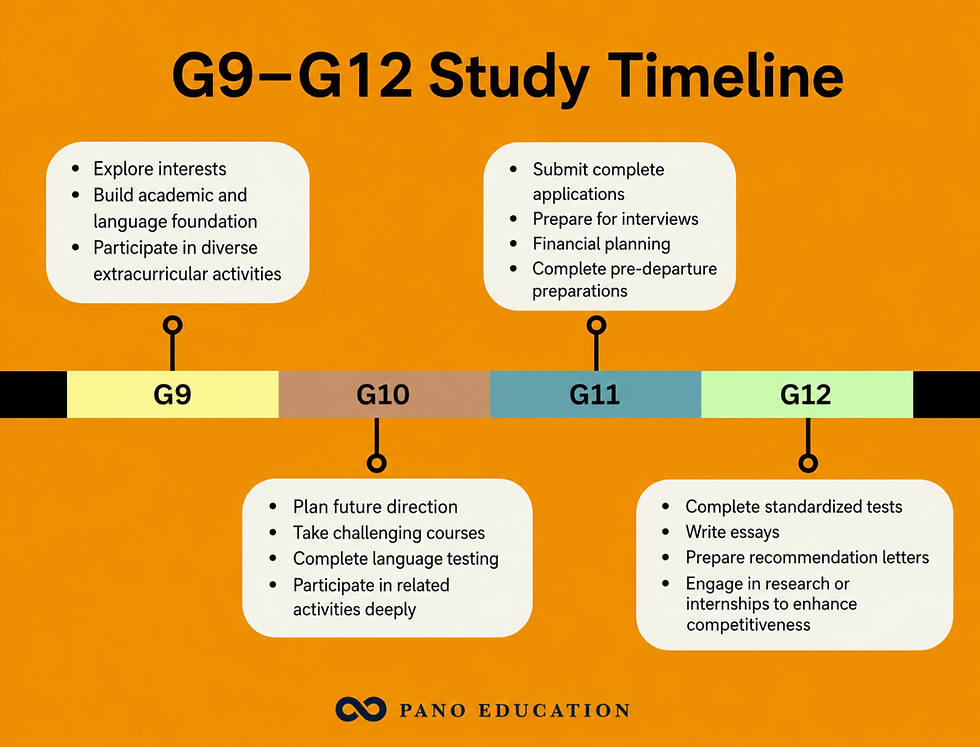
For younger students (Grades 9–10), the key is to accumulate experiences early. Solid experiences let you write multi-dimensional, persuasive essays. A real, well-rounded story makes your application a compelling representation of you.
Advice for Students:
Start early: Follow stage-specific goals (G9–G12) to avoid last-minute stress.
Balance academics and activities: Maintain a high GPA while engaging in meaningful, goal-related extracurriculars.
Highlight connections: Show how experiences link to your interests and intended major.
Plan long-term: Every step is a milestone toward your dream university.
**Want to Learn More About Our Programs? **
Feel free to contact us through the following channels:
Official LINE: @panoedu
Phone: 02-8771-3190 / 0912-090-325
、


Comments