.png)
Silicon Valley's Startup Scene
- JC Guedon
- 2 days ago
- 5 min read


There is no place on earth quite like Silicon Valley. Stretching from San Francisco down through San Jose, this roughly 50-mile corridor has produced more world-changing companies per square mile than anywhere else in history. Google, Apple, Facebook, Netflix, Tesla, Airbnb, and countless others either started here or grew into giants within its orbit. But Silicon Valley is not just a place for established giants. It remains, first and foremost, a place where people come to build something from scratch, and the startup culture that has evolved here over decades is unlike anything else in the world.
Silicon Valley's Startup Scene: The Ecosystem That Makes It Work

What separates Silicon Valley's startup scene from other tech hubs is not simply the presence of smart people or good weather. It is the density and interconnection of every resource a startup needs, all stacked on top of each other in the same geographic area.
Venture capital is the fuel that runs the engine. The valley and San Francisco together house hundreds of VC firms, from legendary names like Sequoia Capital, Andreessen Horowitz, and Kleiner Perkins to thousands of smaller seed funds and angel investors. This concentration of capital means that a founder with a credible idea and a compelling pitch can, in theory, go from conversation to term sheet in weeks rather than months. Nowhere else in the world can a first-time founder realistically knock on so many doors in such a short time.
Then there is the talent. Stanford University and UC Berkeley sit at the heart of the region, producing engineering graduates, business school alumni, and PhD researchers who flow directly into startups every year. Many professors run research labs that spin out companies. Many students start companies before they even graduate. The pipeline between academia and industry here is shorter and more permeable than almost anywhere else, which means startups can recruit deeply technical talent without having to relocate anyone.
The network effects are equally important. In Silicon Valley, it is genuinely common to sit down for coffee with someone and discover that they founded a company, exited it, joined another startup, advised three more, and now angel invests on the side. This circulation of experienced operators creates a culture of mentorship and knowledge-sharing that quietly accelerates every new founder who taps into it.
The Culture of Risk and Failure
One of the most distinctive things about Silicon Valley is its attitude toward failure. In most parts of the world, a failed business carries a stigma that can follow a founder for years. In Silicon Valley, a failed startup is generally treated as tuition. The assumption is that someone who has built a company, even one that didn't work out, has learned things that cannot be taught in a classroom, and that those lessons make them a better founder the second or third time around.
This tolerance for failure is not accidental. It was baked into the valley's culture through decades of watching companies stumble and then watching the people behind them come back stronger. Some of the most successful companies in the world were started by founders who had already failed publicly. The lesson the valley absorbed was that the attempt itself has value, and that the fastest way to learn how to build a company is simply to try.
This is not to say that failure is celebrated blindly. Investors still lose money. Teams still go through painful experiences. But the stigma that might stop someone from trying again elsewhere rarely takes hold here, and that difference in cultural attitude has compounding effects over time on how many people are willing to take the leap.
What It Actually Looks Like to Build Here

For the founders who arrive in Silicon Valley to start a company, the day-to-day reality is a mix of energy and grind. The region has a concentration of co-working spaces, startup accelerators, and incubator programs that give early-stage companies a physical home and an instant peer group. Y Combinator, the most famous accelerator in the world, has launched over 4,000 companies since its founding in 2005, including Airbnb, Dropbox, Stripe, and Reddit. Its twice-yearly batches draw applications from every country, and getting in is now considered one of the most competitive admissions processes in tech.
The valley's coffee shops, WeWork locations, and startup offices hum with the same ambient energy: people in laptops-and-hoodies mode, conversations shifting easily from product roadmaps to fundraising strategy to hiring pipelines. Informal dinners and community events keep founders connected to each other, and the informal exchange of information that happens at these gatherings is part of what makes the ecosystem self-reinforcing.
New Challengers and the Valley's Staying Power
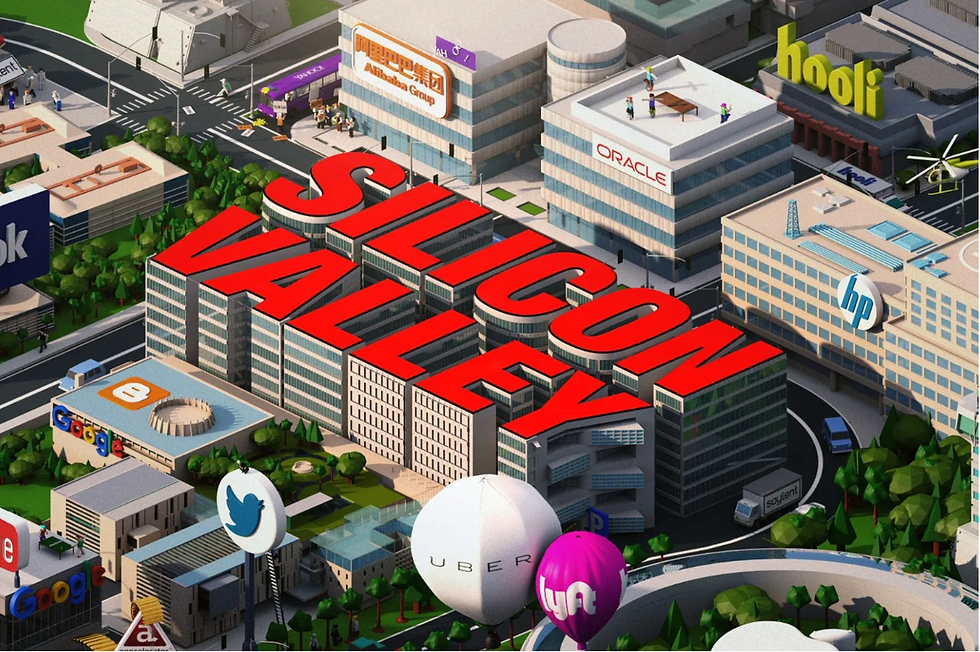
Silicon Valley's dominance has been challenged before. New York, Austin, Miami, Seattle, and London have all had moments of being declared the next great tech hub, and each of those cities has genuinely grown a real and healthy startup scene. Remote work after 2020 accelerated the dispersal of talent beyond the Bay Area in ways that may prove permanent. Costs in the valley remain brutally high, with office space and engineer salaries that can seem impossible for a pre-revenue startup to afford.
And yet the valley keeps producing. The concentration of AI research happening right now in San Francisco and the surrounding area is remarkable: OpenAI, Anthropic, Google DeepMind, and dozens of AI startups are all clustered in the same few neighborhoods, creating the kind of intellectual density that tends to accelerate everything around it. The infrastructure of capital, talent, and networks built over half a century does not relocate easily, and the gravity it creates continues to pull ambitious founders from around the world.
Why It Still Matters
Silicon Valley is not perfect. Housing costs have pushed out teachers, nurses, and working-class families who built the communities that underpin the region. The wealth it generates is distributed unevenly. Its insularity is a genuine flaw: the valley has historically been better at solving problems that affect people who look and live like valley insiders than problems that affect everyone else.
But its capacity to turn ideas into companies, and companies into industries, remains unmatched. For anyone who wants to build something in technology, understanding how Silicon Valley works, what it offers, and what it costs, is worth the effort. The startup scene here did not happen by accident, and the lessons embedded in how it was built are ones that every founder, wherever they are working, can learn from.
**Want to Learn More About Our Programs? **
Feel free to contact us through the following channels:
Official LINE: @panoedu
Phone: 02-8771-3190 / 0912-090-325
、



Comments